


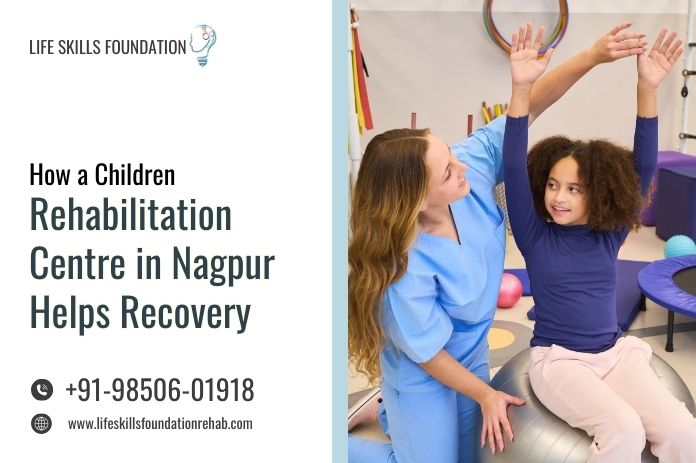
How a Children Rehabilitation Centre in Nagpur Helps Recovery
There are moments in parenting that quietly settle into the heart. A missed milestone. A comparison you didn’t mean to make. A gentle concern that starts as a passing thought and slowly grows louder. You may notice your child struggling with things that seem effortless for others: movement, speech, attention, or everyday tasks. And with that awareness often comes worry, questions, and an overwhelming sense of “Am I doing enough?”
If you’re a parent navigating these thoughts, know this first: concern does not mean failure. It means care. A place like Life Skills Foundation for children rehabilitation centre in Nagpur exists to support families during exactly these moments; not with judgment or labels, but with understanding, patience, and professional guidance.
Here, recovery is approached gently. The focus is never on what a child cannot do, but on what they can learn, strengthen, and grow into, at their own pace, with the right support beside them.
Child Rehabilitation: More Than Therapy, Less Than a Diagnosis
When parents hear the word “rehabilitation,” it can sound intimidating. Clinical. But child rehabilitation is none of those things.
Child rehabilitation is about creating opportunities for movement, communication, independence, and confidence when those don’t come easily on their own. It’s a supportive process designed for children who may experience challenges related to development, neurological conditions, physical limitations, or emotional regulation.
A rehabilitation centre in Nagpur, like Life Skills Foundation focused on children, understands that every child is unique. There is no standard path, no rigid timeline, and no comparison. The goal is not perfection; it is progress that feels meaningful to the child and reassuring to the family.
Why Early Support Often Eases Long-Term Worry
Many parents hesitate before seeking help. They hope time will resolve things naturally. Sometimes it does. Sometimes it doesn’t, and waiting can add unnecessary stress.
Early rehabilitation doesn’t rush a child. Instead, it gently supports development during a phase when the brain and body are especially adaptable. With timely intervention, children often:
- Develop functional skills more confidently
- Learn ways to communicate their needs
- Improve balance, coordination, and daily independence
- Experience fewer frustrations as they grow
Just as importantly, early support helps parents replace uncertainty with understanding. Knowing why something is difficult for your child can be deeply relieving.
What a Children Rehabilitation Centre Actually Looks Like
Many parents imagine rehabilitation centres as sterile or intimidating spaces. In reality, our children rehabilitation centre in Nagpur is designed to feel safe, calm, and welcoming for both children and parents.
Thoughtful Assessments, Not Rushed Conclusions
The journey begins with careful observation. Therapists take time to understand your child, how they move, respond, communicate, and interact. This process is unhurried, because clarity matters.
Personalized Therapy Plans That Grow With Your Child
No two children receive the same plan. Therapy is planned around your child’s needs, abilities, and comfort level. As your child grows and changes, so does the approach.
A Team That Works Together
Child rehabilitation is rarely handled by one professional alone. Depending on needs, care may involve:
- Occupational therapy for daily skills and sensory integration
- Speech and language therapy for communication
- Physiotherapy for movement and coordination
- Behavioral or developmental therapy for emotional regulation
This collaborative approach ensures your child is supported holistically, not fragmented across separate services.
The Emotional Side of Rehabilitation
Rehabilitation isn’t just a journey for children. It’s deeply emotional for parents, too.
There can be hope, guilt, relief, fear, and exhaustion, all at once. A supportive rehabilitation centre in Nagpur, like Life Skills Foundation, recognizes this and makes space for it. We treat parents not as observers but as partners.
You are encouraged to ask questions, express concerns, and share daily experiences. Therapy doesn’t end when a session does; it continues through everyday routines, small interactions, and moments of patience at home.
Progress Doesn’t Always Look the Way You Expect
One of the hardest parts of rehabilitation is learning that progress isn’t always visible right away. Some changes are subtle: longer attention, fewer meltdowns, better posture, improved confidence.
There may be weeks when progress feels slow, or when setbacks appear unexpectedly. This is normal. Growth is rarely linear, especially for children navigating developmental challenges.
As a trusted children rehabilitation centre in Nagpur, we help parents understand that:
- Small gains matter
- Emotional stability is as important as physical milestones
- Consistency often matters more than speed
Building Confidence, Not Just Skills
Beyond therapy goals, rehabilitation nurtures something just as important: self-belief.
When children feel supported rather than corrected, they become more willing to explore, try again, and express themselves. Success may look simple from the outside, but for a child, it can be transformative.
Each achievement, no matter how small, strengthens confidence. And confidence, over time, becomes the foundation for learning, independence, and resilience.
Support Within the Nagpur Community
Nagpur’s growing awareness around child development has made seeking support less isolating. A children rehabilitation centre in Nagpur, like Life Skills Foundation, becomes part of a wider network, working alongside families, schools, and caregivers.
This sense of shared responsibility helps parents feel less alone, and children feel more understood.
FAQs
Q1. What is child rehabilitation?
Child rehabilitation is a structured support system designed to help children who face challenges in physical movement, communication, learning, behavior, or daily functioning. It involves specialized therapies that focus on improving skills, independence, and quality of life while respecting each child’s unique pace and abilities.
Q2. When should parents consider child rehabilitation?
Parents may consider rehabilitation if a child shows delays in milestones such as walking, talking, coordination, attention, or social interaction. Early concerns don’t require certainty, just awareness. A professional assessment can help clarify whether supportive therapy would be beneficial.
Q3. How long does child rehabilitation take?
The duration of rehabilitation varies widely depending on the child’s needs, goals, and response to therapy. Some children benefit from short-term support, while others require longer-term guidance. Progress is reviewed regularly, and therapy plans are adjusted accordingly.
Q4. Will my child need therapy forever?
Not necessarily. Many children attend rehabilitation for a specific developmental phase and gradually transition out as they gain skills and independence. The aim is always to empower the child, not create lifelong dependency on therapy.
Q5. How involved are parents during the rehabilitation process?
Parents play a vital role. Therapists often guide parents on activities, routines, and strategies that can be practiced at home. This collaboration helps reinforce progress and ensures that therapy aligns with the child’s everyday environment.
Support That Grows With Your Child
Choosing a children's rehabilitation centre is not about acknowledging limitations; it’s about recognizing potential. With the right support, patience, and understanding, children can make remarkable progress in ways that truly matter to their lives.
At Life Skills Foundation, a children rehabilitation centre in Nagpur, rehabilitation is approached with empathy, structure, and respect for every child’s individuality. The journey may take time, but it is one filled with learning, resilience, and hope, for children and parents alike.
If you’re exploring support options for your child, sometimes the most important step is simply starting the conversation.