


Can a Psychological Counsellor Help with Stress and Anxiety?
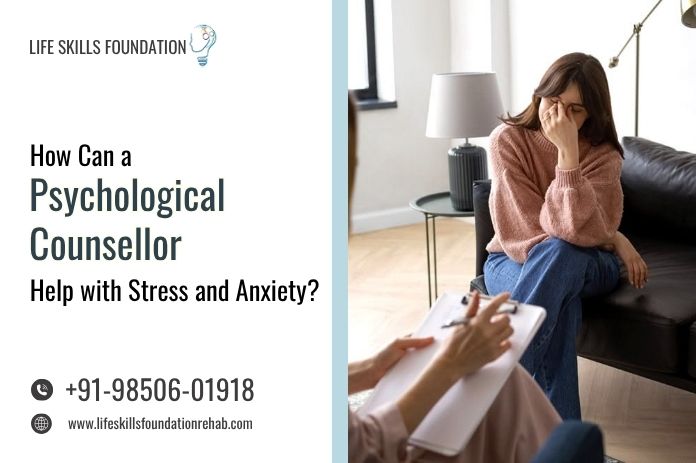
There's a specific kind of tired that has nothing to do with sleep. You wake up already exhausted. Your to-do list feels like it's written in a language you can't quite read anymore. Small things, an unanswered message, a minor inconvenience, a conversation that didn't go quite right, feel disproportionately heavy. And somewhere in the back of your mind, there's a voice saying: "This isn't normal, but I don't know what to do about it.”
The tricky part is that stress and anxiety have a way of normalizing themselves. You adapt. You develop workarounds. You tell yourself everyone feels this way, that it'll pass when things settle down, that you're managing. And technically, you are, but managing isn't the same as being okay. There's a significant gap between the two, and a lot of people spend years living in that gap without realizing there's a way out of it.
That's usually the point where people start wondering whether talking to a psychological counsellor might actually help. And the honest answer is: yes, more often than most people expect, and usually more quickly than they anticipated.
Here's what it actually looks like.
First, Let's Talk About What Stress and Anxiety Actually Do
Stress and anxiety aren't just feelings. Left unaddressed long enough, they become physical. Chronic stress symptoms show up as headaches that won't quit, a digestive system that seems to have its own opinions, and muscles that are permanently braced for something. Stress-related health problems like disrupted sleep, low energy, and a short temper aren't character flaws; they're the body keeping score.
Anxiety disorder treatment becomes relevant when the worry stops being proportional. When the brain starts treating a difficult email like a genuine threat. When panic attacks arrive without warning and leave you shaken for hours. When avoiding certain situations feels easier than facing the anxiety they trigger.
None of this means something is fundamentally wrong with you. It means the nervous system has been under pressure for long enough that it needs some proper support.
So What Does a Psychological Counsellor Actually Do?
A psychological counsellor is not someone who listens, nods, and tells you everything will be fine. That's not counselling; that's a conversation with a very patient friend.
Professional counselling services are structured, skills-based, and purposeful. A psychological counsellor helps you:
- Identify the specific thought patterns driving anxiety, not just "I'm anxious," but why and how the anxiety works in your particular case
- Develop tools for emotional distress relief that actually hold up in real situations, not just in theory
- Understand the connection between your thoughts, feelings, and behaviors, which is the foundation of cognitive behavioural therapy, one of the most effective approaches for anxiety counselling treatment
- Build a different relationship with stress, not eliminating it entirely, but changing how it lands
Stress counselling is less about talking through problems and more about building capacity. By the end of a good course of counselling therapy sessions, most people don't just feel better, they understand themselves better.
The Bit Nobody Tells You Before the First Session
Walking into a counselling therapy session for the first time feels strange for almost everyone. You're not sure how much to say, whether you're "bad enough" to be there, or what the counsellor is looking for.
The answer to all three: just show up and talk. The first session is mostly the counsellor understanding what's brought you in, no pressure to have a perfectly articulated problem statement. Counselling for anxiety doesn't require you to arrive with clarity. Finding that clarity is the point of being there.
What changes over time:
|
Early Sessions |
Later Sessions |
|
Understanding what's actually driving the anxiety |
Using tools independently |
|
Naming patterns that were previously invisible |
Responding differently to stress triggers |
|
Building trust with the process |
Noticing emotional distress relief in daily life |
|
Learning about cognitive behavioural therapy approaches |
Applying anxiety counselling treatment tools instinctively |
"But Is My Situation Serious Enough?"
This is the question that keeps more people from reaching out than almost anything else. There's a persistent idea that counselling is for people who are really struggling: people in crisis, people with a diagnosis, people whose lives have visibly fallen apart. If you're still showing up to work, still maintaining relationships, still functioning, maybe you don't qualify.
That's not how it works. And that belief, more than almost anything else, is what keeps people carrying more than they need to for longer than they should. Many have thoughts like:
"I don't want to seem weak."
Reaching out to a psychological counsellor takes more self-awareness than most people give it credit for. Recognizing that something needs attention and doing something about it isn't weakness; it's the opposite.
"My problems aren't serious enough."
Mental health support isn't reserved for crises. Affordable counselling services in Nagpur at Life Skills Foundation exist for anyone whose quality of life is being affected, and "affected" doesn't require a dramatic threshold. Sleeping badly most nights is “affected.” Dreading situations you used to handle easily is “affected.” Feeling like you're running on empty but not knowing why is “affected.”
"I'm not sure it will help."
Counselling for anxiety and stress has a strong evidence base. Cognitive behavioural therapy has decades of research supporting its effectiveness for anxiety disorder treatment. Most people who commit to the process find meaningful improvement, often more quickly than they expected.
Panic attacks, persistent worry that won't switch off, emotional numbness, stress-related health problems that keep appearing without a clear medical cause, any single one of these is reason enough to speak to a psychological counsellor. You don't need to collect all of them.
The bar for reaching out isn't "I'm in crisis." It's "this is affecting my life, and I'd like it to be different." That's it. That's enough.
What Makes Counselling Different from Just Talking to Someone You Trust
A good friend listens. A psychological counsellor listens differently, with training, structure, and no personal stake in the outcome.
Professional counselling services offer something relationships can't: a completely neutral space where nothing you say creates an obligation, changes a dynamic, or comes back to you in a different form. The confidentiality isn't just a policy; it's what makes genuine honesty possible.
Counselling therapy sessions also have continuity. Each session builds on the last. Patterns emerge over time that wouldn't be visible in a single conversation. That cumulative understanding is what makes anxiety counselling treatment effective in a way that informal support, however well-intentioned, usually can't replicate.
Life Skills Foundation, Nagpur: A Space Built Around You
At Life Skills Foundation, stress counselling and counselling for anxiety are approached with the understanding that every person's experience is different, and that the pace, the focus, and the tools need to match the individual, not a template.
Affordable counselling services are available so that the decision to reach out isn't made harder by practical barriers. Because the hardest part is usually just deciding to begin.
If you've been managing on your own for a while and wondering whether there's a better way, there probably is.
Reach out to Life Skills Foundation in Nagpur today. You don't need to have it figured out before you call.
Frequently Asked Questions
What is psychological counseling?
Psychological counselling is a structured, confidential process where a trained mental health counsellor helps individuals understand and work through emotional and psychological difficulties. Through counselling therapy sessions, it builds tools for managing chronic stress symptoms, anxiety disorder treatment, and emotional distress relief, going beyond conversation to deliver practical, lasting change.
What are the benefits of seeing a counsellor?
Professional counselling services provide a non-judgmental space to process difficulty, build self-awareness, and develop real coping tools. Counselling for anxiety reduces symptom intensity over time, improves sleep and relationships, and equips people with mental health support skills that hold up in daily life, not just inside the session.
How do I know if I need counselling?
If stress-related health problems, persistent worry, panic attacks, or emotional exhaustion are affecting daily functioning like sleep, relationships, work, speaking to a psychological counsellor is worth considering. Affordable counselling services exist for anyone whose quality of life is being affected, not just those in acute crisis.
What happens in a counselling session?
The first session is mostly a conversation; the mental health counsellor understanding what's brought you in and what you're hoping to work toward. Ongoing counselling therapy sessions build on each other, identifying patterns and developing tools through approaches like cognitive behavioural therapy. The pace is always yours.
Is counselling effective for anxiety?
Yes, anxiety counselling treatment has a strong, well-researched evidence base. Cognitive behavioural therapy is among the most effective approaches for anxiety disorder treatment, with consistent outcomes across decades of research. Most people who engage with stress counselling and professional counselling services consistently experience meaningful, lasting improvement in chronic stress symptoms and overall emotional distress relief.